Tree Cabling in Doylestown, PA
Tree Cabling for Structural Support & Risk Reduction
Failure mitigation for trees is a prescription that is diagnosed when tree parts have reached unacceptable thresholds. End weight reduction cuts are an excellent option to change the leverage of tree parts at unions and weak points when available lateral limbs are present to cut to. However, there are situations where making these cuts can stress trees even when done exactly by the book. These instances can be when trees are showing signs of limited growth, have difficult to access tips, lateral limbs have previously been removed and/or are suffering from site limitations.
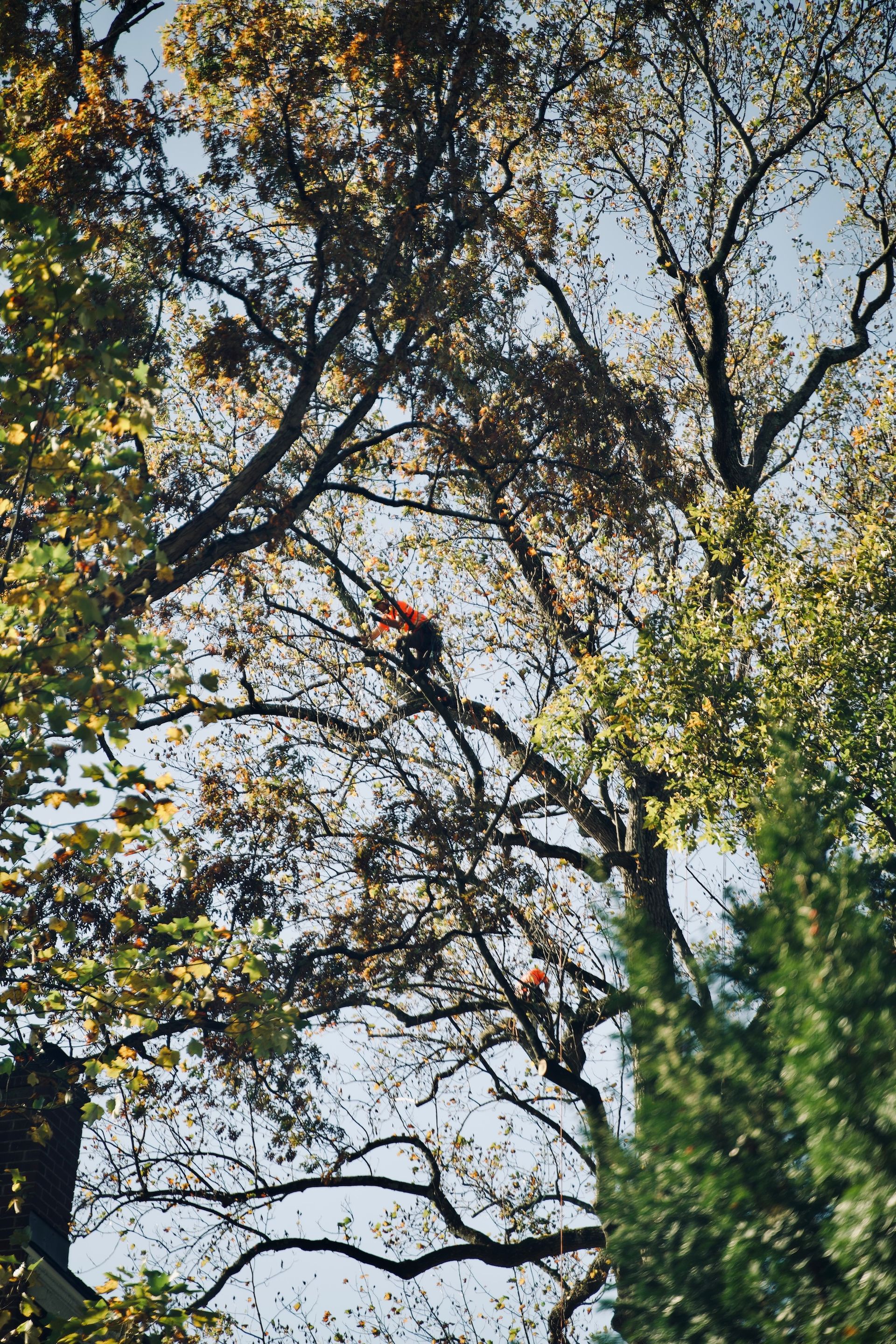
Cabling is a recognized option for failure mitigation. The ANSI A300 promotes cabling as a top choice to reinforce tree structure not only for its effectiveness but it limits the need for excessive cuts. A steel cable can deliver five to ten thousand pounds of strength with only a half inch to one inch incision. Trees prefer this over only heavy cutting and are able to recover quickly through their compartmentalized healing process. This option of drilling is optimal over wrapping straps around tree parts because it does not disrupt the extremely active tissue of the cambium layer. The cambium layer is located 360 degrees around every trunk, lead, limb, branch, twig etc. It conducts water and carbohydrates from the crown to the roots and vice versa. By only making a small hole we disrupt a tiny fraction of this vital area.
Cabling locations in a tree are based off distances from compromised areas and the top of the tree. Angles, wood diameters and tree structure all play a factor in this decision but typically range at the 50 to 75% height mark between the weak spot and the upper canopy. High grade steel is used with specially designed stoppers that are placed on cable ends to stop the cable from clipping through. It is all very compact, with essentially no visual impact to the tree.
Morvin Tree Pruning prides itself on providing professional cabling services. As effective as this procedure is, it cannot be misinterpreted as completely eliminating all risk. Trees that are extremely weak from decline or decomposition should be evaluated thoroughly before cables are chosen. Weather events can lead to outside forces that generate unaccountable forces as well. This makes it necessary for cables to be regularly inspected with most guidelines recommending every 2 to 3 years.
Reinforce Your Tree’s Structure Before Problems Occur
Protect your property and preserve your trees with professional cabling solutions designed to reduce risk without excessive cutting.